The Stranger Who Made Your Best Work Possible
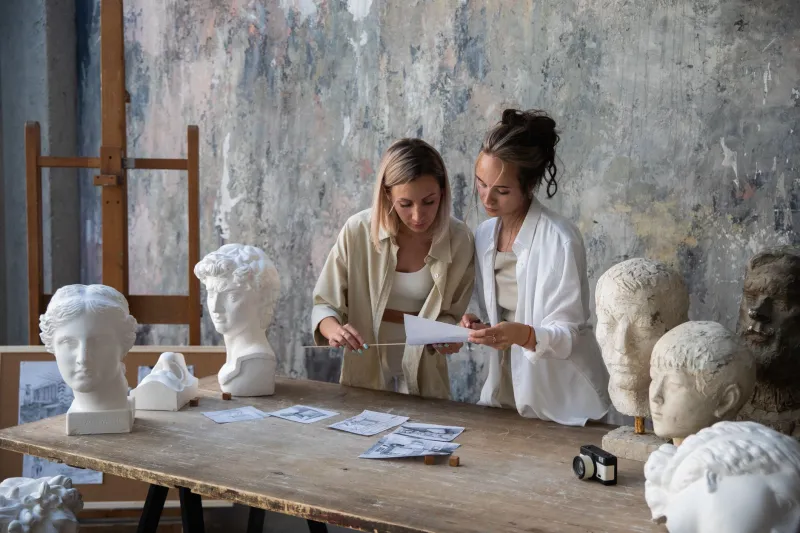
There's a very human instinct to surround yourself with people who think like you do. Same taste in music, overlapping reading lists, a shared obsession with a particular era of cinema or a specific corner of the art world. When we're looking for creative partners, we tend to go fishing in familiar waters. And honestly? That makes sense. Collaboration is vulnerable. You want to feel safe.
But here's what I keep coming back to: some of the most alive, unexpected, genuinely surprising work I've ever seen — and made — came out of pairings nobody planned.
Not the dreamy coffee-shop brainstorms with your best creative friend. The other kind. The assigned partner in a workshop. The artist swap you signed up for on a whim. The residency roommate whose entire aesthetic made you cringe at first glance.
Why We Default to Our Own Kind
Choosing collaborators who mirror our sensibilities isn't laziness — it's efficiency. When you already share a visual language or a narrative instinct, you skip the long, sometimes painful process of establishing common ground. You get to the good stuff faster. Or so it seems.
The problem is that "the good stuff" often turns out to be a more polished version of what you were already doing alone. Competent, cohesive, maybe even beautiful — but not surprising. Not to you, and maybe not to anyone else either.
When we only work with people who confirm our instincts, we stop questioning those instincts. And that's where creative work starts to calcify.
The Friction Is the Point
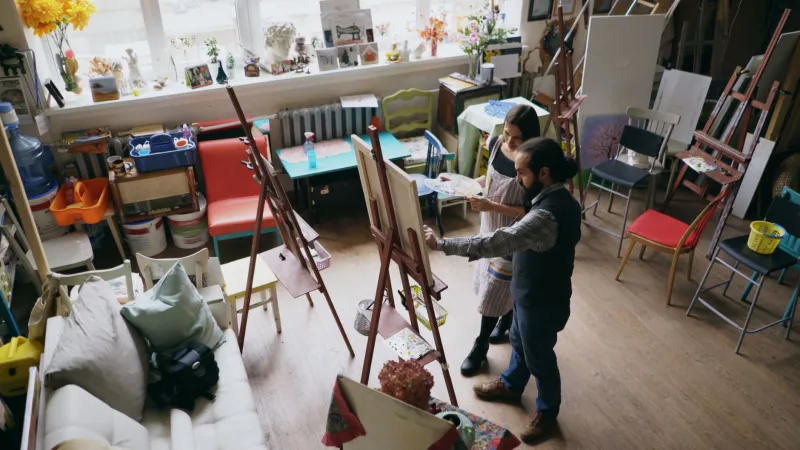
I once participated in a collaborative zine project where contributors were randomly paired. I got matched with someone whose work was loud where mine was quiet, maximalist where I lean spare. My first reaction was mild dread. We had almost nothing in common aesthetically.
What came out of it was one of the stranger, more interesting pieces I've been part of. Not because we found a comfortable middle ground — we didn't, really — but because we kept bumping up against each other's assumptions. She'd push something further than I thought it should go. I'd pull back in ways that frustrated her. The final work had a tension in it that I couldn't have manufactured on my own.
That tension? That's not a flaw in the collaboration. That is the collaboration.
When two people don't share the same reflex, the work has to justify itself at every turn. Nothing gets a free pass just because it feels instinctively right to one person. You're forced to articulate why something matters, why a choice belongs, what you're actually trying to say. That kind of interrogation is uncomfortable. It's also incredibly clarifying.
Constraints as Collaborators
It's worth broadening the idea of "unexpected collaboration" past just people. Sometimes the surprise partner is a constraint you didn't choose — a format you've never worked in, a deadline that's genuinely too tight, a brief that seems to box you into a corner.
Creative constraints have a long track record of producing weird, wonderful outcomes. The Dogme 95 filmmakers. The Oulipo writers. The 48 Hour Film Project, which has been running in cities across the US for decades and keeps generating shorts that feel more alive than half of what comes out of careful, well-resourced development.
The constraint forces you off your default path. And once you're off that path, you start noticing things you would have walked right past.
What You Learn About Yourself
Here's the part nobody really advertises about uncomfortable collaborations: they're diagnostic.
When you work with someone who doesn't share your assumptions, you find out which of your preferences are actually principles and which ones are just habits. There's a difference. A principle is something you'll defend even when challenged, because it connects to something real about what you're trying to make. A habit is something you've been doing so long you forgot you chose it.
Unexpected collaborators have a way of surfacing that distinction fast. They'll question the thing you've never questioned, and you'll either find a real answer — which deepens your understanding of your own work — or you'll realize you don't have one, which is equally valuable.
Either way, you come out knowing yourself better as a creative person. That's not nothing. That's actually a lot.
The Art of Staying Open Long Enough
None of this is an argument for abandoning your instincts or pretending that every forced pairing is secretly a gift. Some collaborations genuinely don't work. Incompatibility is real. Creative mismatches exist.
But there's usually a gap between the initial discomfort of working with someone unfamiliar and the actual failure of the collaboration. Most people bail — mentally, if not literally — somewhere in that gap. They decide early that it's not working and stop investing in the possibility that it might.
Staying open a little longer than feels comfortable is its own creative skill. It's something you build, not something you either have or don't. And the more you practice it, the more you start to recognize the difference between friction that's generative and friction that's just friction.
Choosing to Not Always Choose
If you're someone who carefully curates every creative relationship — and there's nothing wrong with being that person — it might be worth deliberately opting into something unchosen every now and then. Sign up for a collaborative project where you don't control the pairings. Submit to a publication with a strict formal constraint. Say yes to the group show where you don't know the other artists.
Not because your chosen collaborators aren't valuable. They are. But because the person you didn't pick might show you something about your work — and yourself — that no one in your existing circle ever could.
The best creative relationships aren't always the ones that feel easiest from the start. Sometimes they're the ones that asked something of you before they gave anything back.