You Don't Owe Anyone a Window Into Your Studio
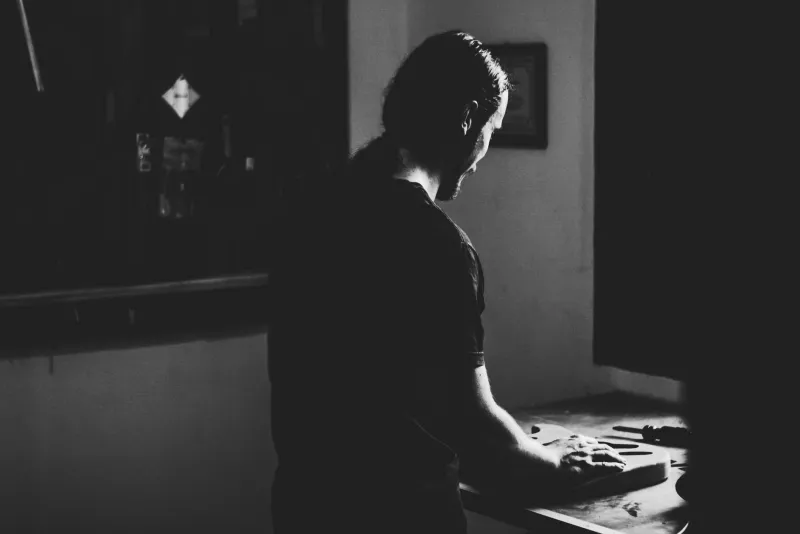
Somewhere along the way, "building in public" stopped being one option among many and became the default expectation for anyone trying to build a creative career. Document your process. Show the behind-the-scenes. Share the mess. Be transparent. Be relatable. Let people in.
And look — I get it. There's real value in process content. It builds connection, demystifies creative work, and can genuinely help an audience feel invested in what you're making. I've seen it work beautifully for a lot of people.
But I've also watched artists tie themselves in knots trying to perform their creative process for an audience while simultaneously trying to actually have a creative process. And those two things, more often than not, are working against each other.
So here's an opinion I'll put my name on: you are not obligated to share your process with anyone. Not your followers, not your clients, not the algorithm. The studio — the real one, the mental and physical space where the actual work happens — is yours. You get to decide how much of it becomes content.
The Myth of Radical Transparency
There's a particular flavor of creative advice that's been circulating for years now, and it goes something like this: the more you share, the more people will trust you; the more they trust you, the more they'll support your work; therefore, share everything.
This logic isn't entirely wrong. Transparency does build trust. Audiences do appreciate authenticity. But the advice collapses when it's applied without nuance, because it assumes that more is always better — and for creative work, that's almost never true.
Deep creative work requires a specific kind of mental environment. It needs unobserved space. It needs the freedom to be bad, confused, exploratory, and unresolved without those states being immediately broadcast to an audience waiting for a satisfying arc. The moment you start documenting your process for consumption, you change the process. You start making choices based on how they'll look from the outside rather than what the work actually needs.
This isn't a theoretical concern. Talk to any artist who's built a significant process-documentation following and ask them honestly: does the content requirement ever pull you away from the work? Almost universally, the answer is yes.
What Gets Lost in the Sharing
There's a particular quality that lives in the early stages of creative work — the phase before anything has been named or decided, when the possibilities are still genuinely open. It's fragile. It doesn't survive being watched.
When we share too early and too often, we collapse that possibility space prematurely. We get feedback before the work has found its own logic. We make decisions based on what's resonating with an audience rather than what the piece is asking for. We perform the creative process instead of living it.
Some of the most interesting creative decisions happen in the dark — in the sketches that go nowhere, the drafts that get deleted, the ideas that need a full year of quiet marinating before they're ready to become anything. Those moments don't photograph well. They don't make good Reels. And they're often the exact moments where the most important work is happening.
Protecting that space isn't antisocial or mysterious or a marketing failure. It's just good creative hygiene.
Building an Audience Without Selling Your Process
Okay, but here's the practical reality: if you're a working creative trying to sustain a career, you do need some kind of audience. You need people who are interested in what you're making, who will show up when you release work, who will support you financially through purchases or commissions or Patreon or whatever model fits your practice.
The good news is that sharing your process is not the only way to build that. Not even close.
Share the thinking, not the making. There's a meaningful difference between documenting the physical act of creating (which can be intrusive to the work itself) and sharing the ideas, questions, and obsessions that are driving your creative decisions. The latter is often more interesting to an engaged audience anyway — and it doesn't require you to have a camera running in your studio.
Let the finished work speak. Revolutionary concept, I know. But a well-presented, thoughtfully captioned finished piece can build more genuine connection than a dozen process videos of someone staring at a canvas. Trust the work to do some of the relationship-building.
Choose what to share with intention. If you do share process content, make it deliberate. Not every day, not every piece, not every stage. Share the moments that feel genuinely worth sharing — not the moments that feel like they should be shared because it's Tuesday and you haven't posted anything.
Be honest about your boundaries. You can tell your audience that you work privately without making it a whole thing. A simple "I tend to share work once it's finished rather than while it's in progress" is enough. Most people, honestly, respect that more than they let on.
The Quiet Radical Act of Keeping Something for Yourself
In a creative landscape that increasingly rewards disclosure, choosing privacy is a small act of resistance. Not dramatic resistance — you're not fighting the system by keeping your sketchbook off Instagram. But it's a meaningful choice about what your creative life is actually for.
If the work is for you — if it's the thing that keeps you sane, that makes you feel like yourself, that gives your life meaning — then protecting it from the content machine is an act of self-preservation. The audience relationship matters. The career matters. But neither of those things matter more than the integrity of the work itself.
Your studio doesn't need a window. It just needs you in it, working.
Everything else is optional.


