What the 'No' Actually Said (And Why I Finally Started Listening)
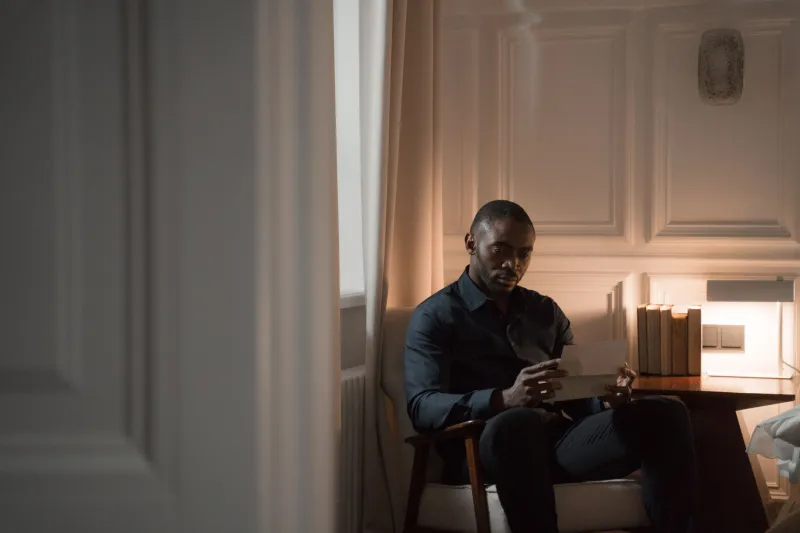
There's a particular kind of silence that follows a rejection. Not the peaceful kind. The kind where you refresh your inbox three times even though you already read the email, as if rereading it will somehow change the outcome. I've sat in that silence more times than I care to count — after gallery submissions, after pitching essays to publications, after sending work samples to collaborators I genuinely admired. And for a long time, I treated every single one of those moments as a small funeral.
It took me embarrassingly long to realize I was doing it wrong.
The Acceptance That Told Me Nothing
Let me back up. A few years ago, I had a piece accepted into a group show at a mid-sized gallery in the city. I was thrilled — genuinely, jump-around-your-apartment thrilled. The acceptance email was warm but brief. They loved the work, they were excited to include it, here were the logistics. That was it.
I showed up, hung the piece, smiled at the opening, sold nothing, and left feeling vaguely hollow. I had no idea why it had been selected. I didn't know what it communicated to viewers, what it sat next to thematically, or what the curators saw in it that made them say yes. The acceptance was a closed door dressed up as an open one.
About six months later, a different gallery passed on a submission. The rejection was three paragraphs long. They explained what they were building toward in their current programming, where my work didn't quite land within that context, and — here's the part that stung and then didn't — they pointed out that the piece felt like it was in conversation with itself rather than with an audience.
I wanted to be defensive about that. I tried, actually. But the comment wouldn't leave me alone, which is usually a sign that something true has been said.
Rejection as Diagnostic Tool
The creative community talks a lot about resilience in the face of rejection, and that's not wrong — you do need a certain thickness of skin to keep making work and putting it out there. But resilience without curiosity is just stubbornness with better PR. Bouncing back matters less than bouncing back smarter.
When I started treating rejections as diagnostic information rather than character judgments, everything shifted. Not overnight, and not without some resistance on my part. But gradually, I built a habit of sitting with a rejection for a few days before filing it away, asking a few honest questions:
- What specifically wasn't working, according to the feedback (or according to my gut, when no feedback was given)?
- Is this a mismatch between my work and this particular context, or is there something in the work itself that needs attention?
- What does this rejection reveal about assumptions I've been making about my own output?
That last question is the uncomfortable one. Because sometimes the answer is: you've been coasting. You've been making work that feels good to you in the studio but doesn't have enough outward-facing energy to connect with anyone outside your own head. That's not a fatal flaw. It's just information. But you can't act on information you refuse to receive.
The Silence Rejections Are the Hardest Teachers
Some rejections don't come with explanations. A query letter goes unanswered. A collaboration pitch gets a polite but vague pass. An audience simply doesn't engage with something you made. These are trickier, because you're left to do the diagnostic work yourself with limited data.
I used to find these maddening. Now I find them clarifying in a different way. When there's no external feedback to parse, you have to turn inward and ask: what did I actually make here? Not what did I intend to make, but what landed on the page or the canvas or in the recording? Sometimes that gap between intention and execution is the whole story.
Silence rejections also have a way of forcing you to examine your relationship with visibility. If you sent something out hoping it would do the work of being seen for you — hoping the acceptance would confirm that you exist and matter — the silence has exposed something worth looking at. That's not comfortable. But it's useful.
What the Good Rejections Have in Common
Looking back, the rejections that actually changed my trajectory all shared a few qualities. They were specific. They were honest without being unkind. And they pointed toward something I could actually do differently — not just feel differently about.
The worst rejections I've received weren't the bluntest ones. They were the vague ones that offered no traction. "Not right for us at this time" is professionally necessary but creatively useless. Compare that to a magazine editor who once told me my essay had a strong opening but collapsed in the third act because I was too afraid to arrive at the obvious conclusion. That one hurt. That one also made me a better writer.
If you're lucky enough to get specific feedback in a rejection, treat it like the rare resource it is. Don't perform gratitude and then ignore it. Don't weaponize it against yourself either, spiraling into a story about how you'll never figure this out. Just work with it. Put it somewhere you'll see it. Let it become part of how you approach the next thing.
Reframing Without Toxic Positivity
I want to be careful here, because there's a version of this conversation that slides into the kind of relentless optimism that's more about managing feelings than actually improving your work. Not every rejection contains a lesson. Some are genuinely just bad timing, wrong fit, or decisions made for reasons that have nothing to do with you or your work.
Reframing rejection as information doesn't mean pretending it doesn't sting. It does. It should, a little — it means you cared about something. But there's a difference between letting it sting and letting it stick. The sting is human. The sticking is a choice.
The artists and writers I most admire don't have a higher tolerance for rejection so much as a healthier relationship with it. They've learned to hold it loosely — to look at it, extract what's useful, and keep moving. Not because they're tougher than the rest of us, but because they've practiced that particular kind of attention long enough that it's become second nature.
The Work That Came After
That piece a gallery told me was in conversation with itself rather than its audience? I reworked it. It took months and felt, at times, like dismantling something I loved. The final version looked almost nothing like the original, and it was better — more open, more willing to be seen. It's since been included in two shows and is the piece I'm most proud of in my current body of work.
None of that happens without the rejection. The acceptance I got six months earlier would have let me keep making closed-off work indefinitely, comfortable and unchallenged. The 'no' cracked something open.
That's the thing about rejection that nobody really tells you when you're starting out: sometimes it's the most generous thing a creative life can offer you. You just have to be willing to unwrap it.