Shedding the Skin You Grew Into: Reckoning with Work That No Longer Looks Like You
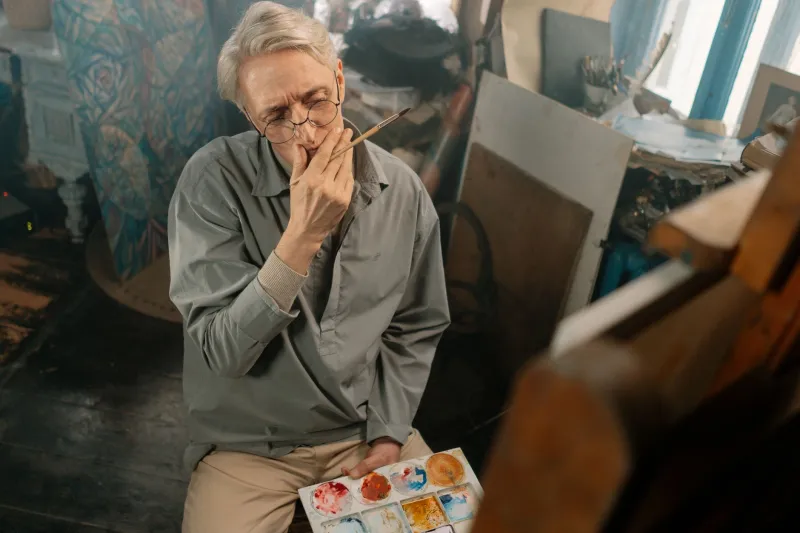
There's a specific kind of cringe that only creatives know. It's not the universal embarrassment of finding an old photo from your middle school years or rereading texts you sent at 2 a.m. It's something quieter and more complicated — the moment you stumble across a piece of your own work and think, I don't make things like that anymore. I'm not sure I even want to.
Maybe it's the illustration style you built your early Instagram following around. The essays you wrote when you were angrier, rawer, less considered. The paintings that got you your first gallery show — work that felt revolutionary at the time and now just feels like a draft of yourself you've long since moved past.
This is the rebrand reckoning. And almost no one talks about how strange it actually is to live through.
The Work That Made You Famous Doesn't Have to Define You Forever
Here's the thing about early success in any creative field: it's a gift wrapped in a trap. When a particular style or voice or aesthetic gets you noticed — gets you followers, clients, press, opportunities — there's enormous pressure to keep making that thing. The audience you attracted came for that version of you, and somewhere along the line, you started to feel like you owed it to them to keep showing up the same way.
But creative growth isn't a straight line. It meanders, doubles back, takes hard left turns. The work you made at 24 was true to who you were at 24. The work you're making now is true to who you are today. Neither cancels out the other — but they don't have to occupy the same space in your portfolio, your website, or your sense of professional identity.
The mistake a lot of us make is treating evolution like betrayal.
The Guilt of Moving On
Let's be honest about the guilt piece, because it's real and it's worth naming. When you quietly archive old work, update your bio, or start presenting a different aesthetic to the world, there's often a nagging voice that says you're being dishonest. That you're erasing your roots. That the people who supported you early deserve better than to watch you pivot.
But consider this: every artist you admire has a body of work that spans decades and phases. David Bowie didn't apologize for not being Ziggy Stardust forever. Zadie Smith's early novels don't sound like her recent essays, and that's not a scandal — it's a career. The writers, painters, and makers we respect most are the ones who kept pushing, even when it confused the people who'd gotten comfortable with their last chapter.
Honoring your journey doesn't mean keeping every piece of it on display. It means acknowledging that all of it — including the work you've outgrown — contributed to who you've become.
The Practical Side: What to Actually Do
Okay, so you've accepted that you've changed. Now what? Because the psychological piece is only half of it. There's also the very real, very logistical problem of an old website, an outdated social media feed, and a portfolio that tells the wrong story.
Start with intention, not a bonfire. Resist the urge to delete everything in a single afternoon of clarity. Archive thoughtfully. Some old work belongs in a dedicated "earlier work" section — context can transform something from an embarrassment into a data point on your creative timeline. Other pieces can quietly retire without ceremony.
Rewrite your bio first. Your bio is often the first thing people read, and it sets the frame for everything else they see. Update it to reflect where you are now, not where you were when you first launched that website three years ago. It doesn't have to be a manifesto — even small language shifts can signal a meaningful evolution.
Let the transition be visible. You don't owe anyone a press release about your creative rebrand, but you also don't have to pretend the shift isn't happening. Some of the most engaging creative content comes from artists who share the in-between — the moment of figuring out who they're becoming. Audiences are more perceptive and more forgiving than we give them credit for.
Give the new work room to breathe. One of the quieter challenges of evolving publicly is that your old work still performs. Old blog posts still rank. Old illustrations still get shared. It can feel like the internet is conspiring to keep you in the past. The antidote isn't to fight the algorithm — it's to keep making new work consistently enough that the new story eventually overtakes the old one.
The Version of You That's Coming Next
Here's what I keep coming back to: the discomfort of no longer recognizing yourself in your old work is actually a sign that something is working. Stagnation is comfortable. Growth is the thing that makes you squirm.
The pieces you made when you were just starting out — the ones that feel naive or misaligned or just not quite you anymore — those pieces were you being brave enough to put something into the world before you had it all figured out. That bravery is worth respecting, even when the work itself is ready to be retired.
You don't have to carry every version of yourself into every room you walk into. You're allowed to grow out of your own skin, shed it cleanly, and move forward into the work that actually represents who you've become.
That's not abandonment. That's just the job.